Website SEO: What It Is and What to Realistically Expect

Website SEO is the work of helping Google find, understand and show your site to people searching for what you do. It has three parts: technical (the site can be read and loads fast), content (the site answers your customers' questions) and trust (other websites, reviews and your Google profile confirm that you are real).

The realistic expectation is that results come gradually. In its video on hiring an SEO, Google said that in most cases it takes four months to a year to implement improvements and see the benefit. Some technical problems, such as a site Google cannot see at all, can be fixed faster.

Nobody can guarantee first place. Google says so itself: no one can guarantee a number one ranking on Google, and if someone promises it, find someone else. Google also does not accept payment to rank higher in regular results.

That is why it helps to know what SEO is, and what it is not, before you pay for it. Below is what the work includes, what a year of work on a site looks like and which promises to watch out for.

IT Expert from Belgrade builds websites and does SEO in its own code. After a site review you get a list of problems, and you choose whether we fix them or someone else does.
What SEO Is Made Of

01Technical

Google has to find your pages, read them and add them to its index. This covers the sitemap, correct titles and descriptions, speed, the mobile view and pages that do not return errors.

02Content

A page ranks for what it clearly talks about. If customers type "boiler repair New Belgrade" and the site only says "services", Google has nothing to match to that search.

03Trust

Links from other websites, reviews, your Google Business Profile and company details that match everywhere. These are signs that the business exists and people use it.

Site structure diagram: home page linked to service pages and subpages

Technical SEO: Making Sure Google Can Read Your Site

Google Search works in three steps: it finds pages, analyzes and stores them in its index, then shows them when someone searches. If a page gets stuck at the first or second step, content does not help, because Google does not know about it.

That is why a site review starts in Google Search Console, Google's free tool that shows which pages are indexed, which are not and why. It also reveals problems owners usually miss: pages returning errors, duplicates and pages blocked from search.

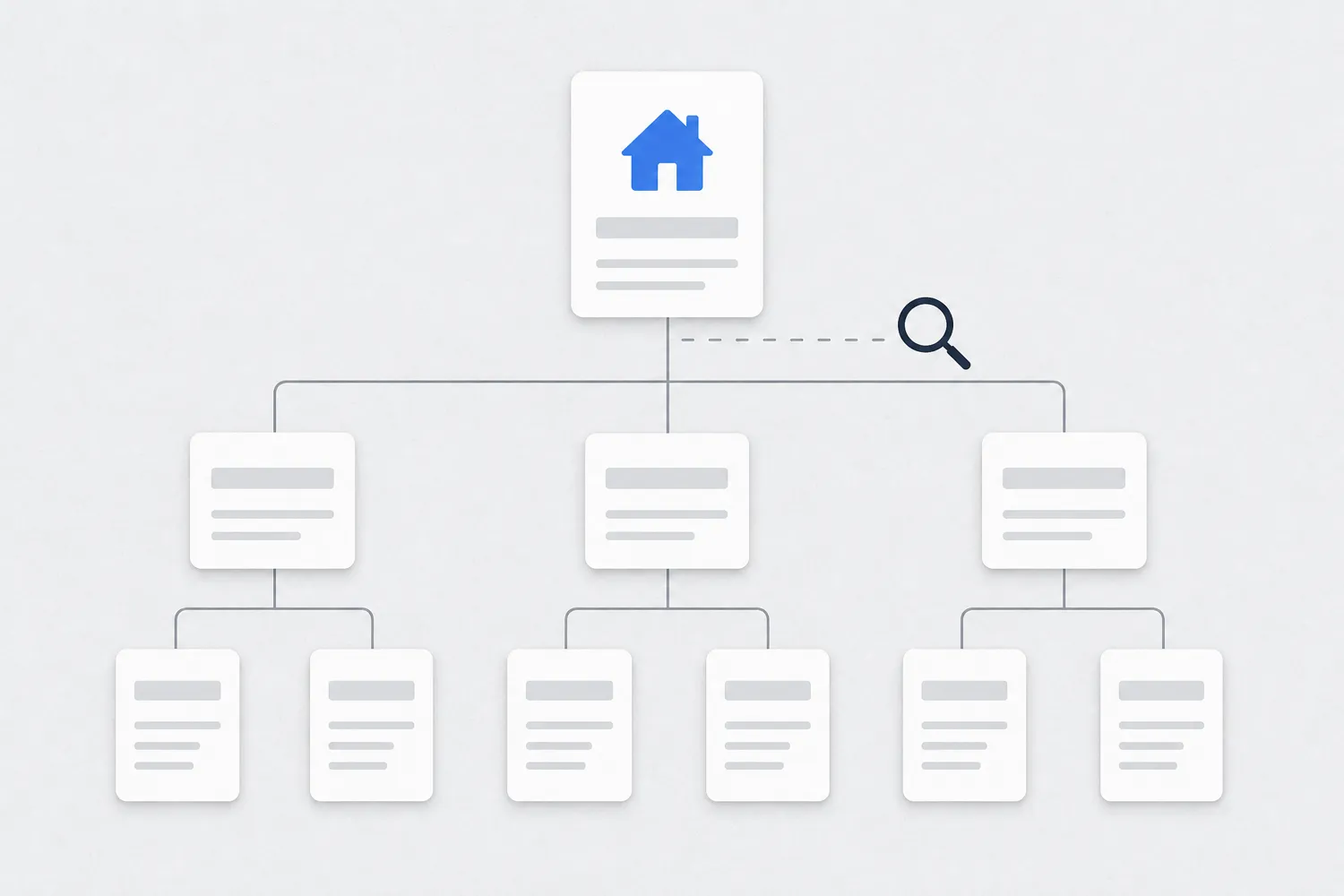
Structure is the second part. Every important service should have its own page, with its own title and address, linked from the home page and the menu. A page that takes five clicks to reach, or that no link points to, struggles to rank.

Page titles and the descriptions shown in search results are written for people, not just for Google. They decide whether someone clicks your result or the one below it.

Phone with a business website and four green circular page quality indicators

Speed and the Mobile View

Most people open your site for the first time on a phone, often on a mobile network. If the page loads slowly or elements jump around while someone tries to tap, many give up before they see what you offer.

Google measures page experience with Core Web Vitals: how fast the main content appears, how fast the page responds to a tap and whether the layout shifts. You can see the results for your site in Search Console or in PageSpeed Insights.

Speed alone does not put a site in first place, but a slow site loses visitors that SEO has already brought in. The usual causes are oversized images, too many plugins and scripts and cheap hosting.

On sites we build in our own code we measure speed before handover and after every larger change, because it is most easily lost through small additions over time.

Laptop with a text editor: a heading, subheadings marked in blue and paragraphs

Content: Answers to the Questions Customers Really Type

Google tries to show the page that best answers the question. So SEO content is not text stuffed with keywords, it is text that clearly says what you do, for whom, where and on what terms.

A blog helps when it answers questions people ask before they buy. One good article that solves a real problem is worth more than ten short news items.

A good service page usually has:

  • a title that names the service and the place, such as air conditioner service in Zemun,
  • the answer to the main question in the first paragraph,
  • a description of how the job goes, step by step,
  • answers to the questions customers ask you on the phone,
  • real photos of your work and a clear way to get in touch.
Card with a map, a blue location pin and five stars linked to a business website

Local SEO: Your Website and Google Profile Must Agree

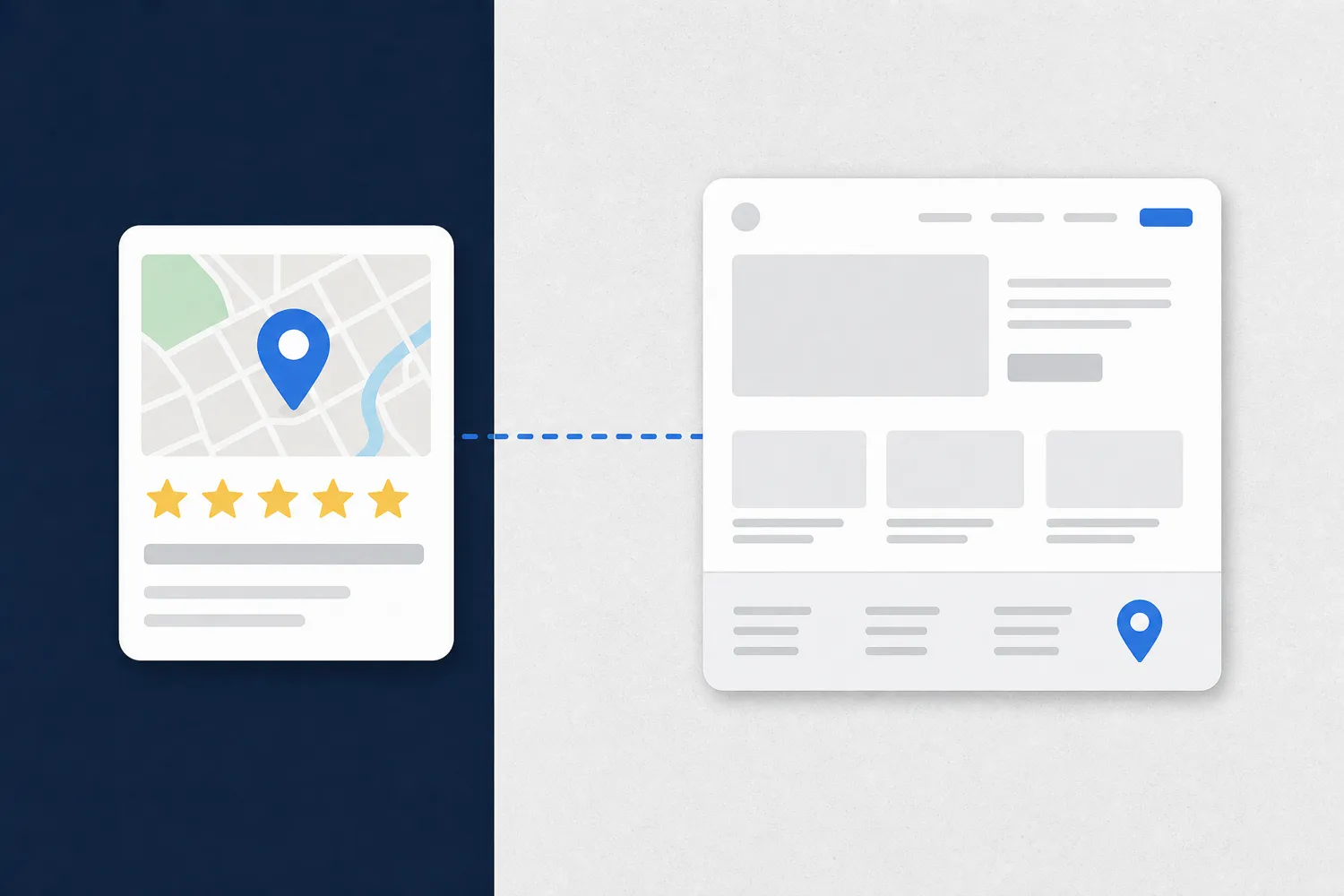
For businesses serving customers in their own city, part of the search happens on the map. When someone searches for "dentist Vračar", Google often shows a few businesses on the map first and the regular results after.

Your place on the map depends on your Google Business Profile: the right category, address or service area, photos and reviews. The website helps by confirming the same details: the same name, address and phone number, and a page for each service and location.

If the website shows one address, the profile another and a directory a third, neither Google nor customers know which to trust. Aligning those details is one of the cheapest steps in all of SEO.

SEO is one part of digital marketing. When you need results quickly while organic search grows, paid ads and social media can fill that time.

Traffic chart that is flat for the first months and then slowly rises

How Long SEO Takes and What a Realistic Workflow Looks Like

SEO is not a one-off job, but it is not endless work without results either. Work on a site usually goes in this order, and the pace depends on the state of the site, the competition and how quickly changes go live.

Every step comes with measurement. Without Google Analytics and Search Console you do not know whether enquiries came from search, ads or word of mouth.

  1. Review: Search Console, the index, errors, speed, structure and what your customers actually search for.
  2. Technical fixes: anything that stops Google from reading the site comes first, because nothing else works without it.
  3. Structure and service pages: every important service gets its own page with a clear title.
  4. Content: answers to customers' questions, starting with those that bring the most business.
  5. Local signals: Google profile, reviews and company details aligned everywhere.
  6. Measurement: track calls, enquiries and visits from search, not just the position for one keyword.

Promises You Should Not Pay For

If someone guarantees you first place on Google, by a certain date or for a certain keyword, that is a reason to look for someone else. Google's own guide to choosing an SEO says the same.

Be careful with unsolicited emails offering an "SEO package" and hundreds of links. Bought links and artificial texts break Google's spam policies and can push a site down instead of up.

A good SEO explains what they change and why, shows results on real data and asks only for the access they need. When SEO is part of website maintenance, the site is monitored daily, and changes and patches do not wait for the end of the month.

Frequently Asked Questions About Website SEO

It is work on and around your website so Google can find it, understand it and show it to people looking for what you offer. It covers the technical side, content and trust, including your Google Business Profile and links from other sites.
Google has said that in most cases it takes four months to a year to implement improvements and see the benefit. Technical errors can be fixed faster, and strong competition in your field makes the timeline longer.
Not in regular results. Google states that it does not accept payment to crawl a site more often or rank it higher. Only ads are paid for, and they are labeled as sponsored and work separately from organic search.
The basic technical fixes are done once, but your site changes, so does the competition, and Google updates how it ranks pages from time to time. That is why SEO is usually done as part of ongoing maintenance and adding content.
It depends on the state of the site, the number of pages and the competition. You can see our packages on the packages page, and after a site review you get a list of problems and a proposal for what to do first.