A landing page is a standalone page built for one goal: getting a visitor from an ad, email or post to call, send an inquiry or buy. When it is enough instead of a full website, what it must include and how to measure results.
Landing Page: What It Is and When You Need One Instead of a Website
A landing page is a standalone page built for one goal: getting a visitor who comes from an ad, email or post to do one thing, call, send an inquiry or buy. You need one when you are sending people to a single offer rather than to your whole business.
It is called a landing page because it is where the visitor lands after a click. The difference from a regular page on your site is focus: no menu, no links to ten other pages, one proposal and one button.
A common situation: a business pays for ads and they lead to the home page. A visitor who clicked an ad for air conditioning lands on a page with news, a gallery and a list of twelve services, and has to look for what they came for. Many do not bother.
Below is what a landing page is, what it is made of, when it is enough instead of a full website and when it is not, and how to tell whether it works.
IT Expert is a team from Belgrade that builds websites and landing pages and runs Google Ads. We look at the landing page and the ad together, because one rarely works well without the other.
You are running Google or Facebook ads for one service or product. Each ad leads to a page about exactly that.
02A promotion with a deadline
You have a seasonal offer, an event or a sign-up with a deadline. When it ends, the page goes away and the website stays untouched.
03Testing a new service
You want to see whether there is interest in a new service before building a website or a new section for it.
04A first step online
You have no website, but you need a place where people can see your offer and call you. A landing page is a faster start than a full site.
How a landing page works
A landing page works by continuing the conversation the ad started. The visitor clicked on a specific promise, and the first thing they see has to be that promise, with a way to act right below it.
The path is short: ad, landing page, call or inquiry. Every extra click, menu or link to another page is a place where the visitor can give up or get lost.
With Google Ads, the landing page also affects cost. Quality Score has three parts: expected clickthrough rate, ad relevance and landing page experience, and it is shown on a scale from 1 to 10. A page that matches the ad and loads quickly helps that third part.
That is why each campaign should have its own page. An ad for air conditioner servicing leads to a page about air conditioner servicing, not to a page about every service the business offers.
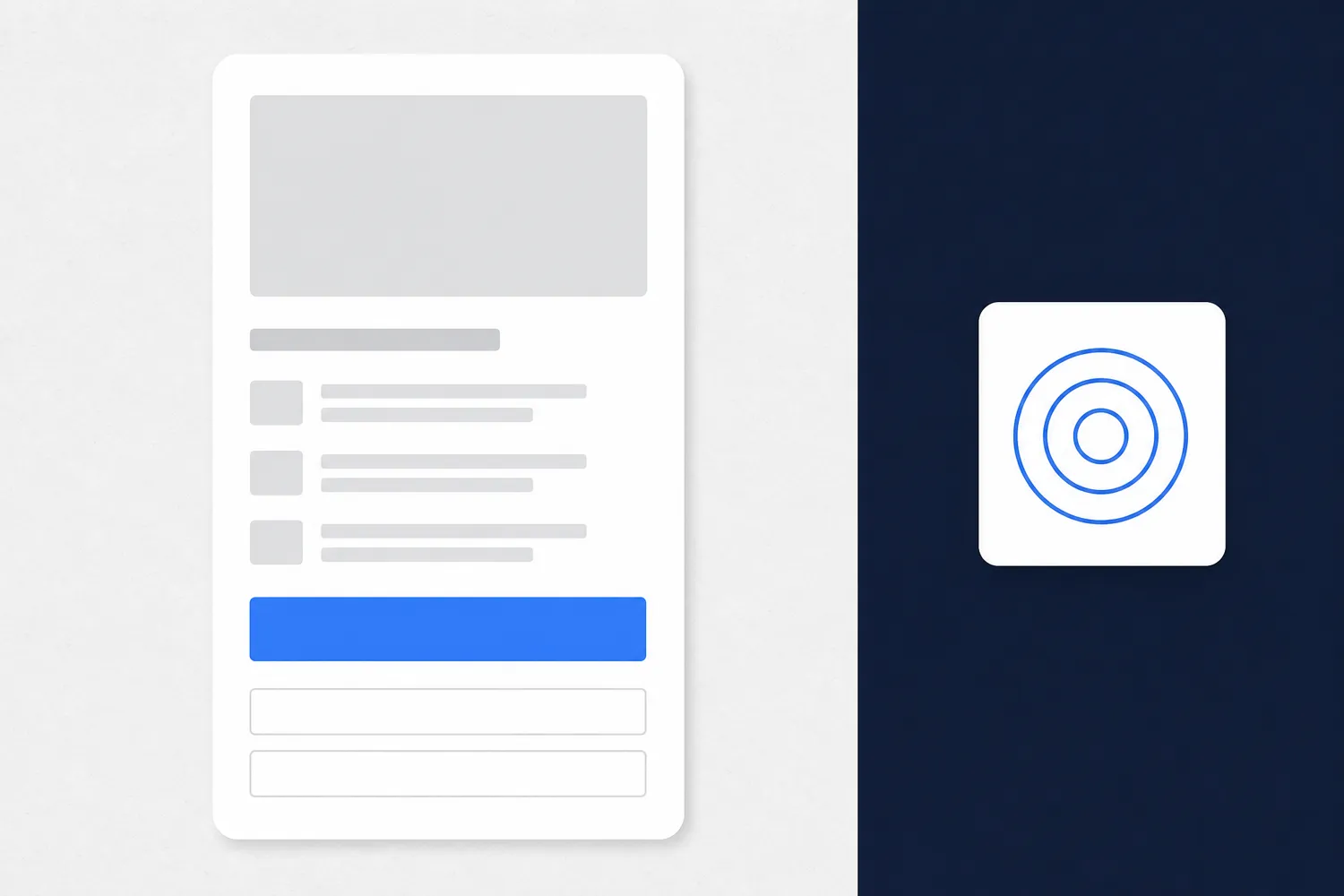
A good landing page has five parts, in the order a visitor makes a decision: what do I get, why here, who has tried this, what if I change my mind and how do I start.
All of it should fit into a few screens, without long introductions. On the first screen, without scrolling, the visitor should know what you offer and what the next step is.
A headline that repeats the promise from the ad, with a button right below it
Three or four specific benefits, not generic phrases
Proof: real reviews, examples of work or numbers you can back up
Answers to the questions that hold buyers back: price, timing, guarantee
A short form or call button, repeated at the end of the page
Landing page or full website
01Goal
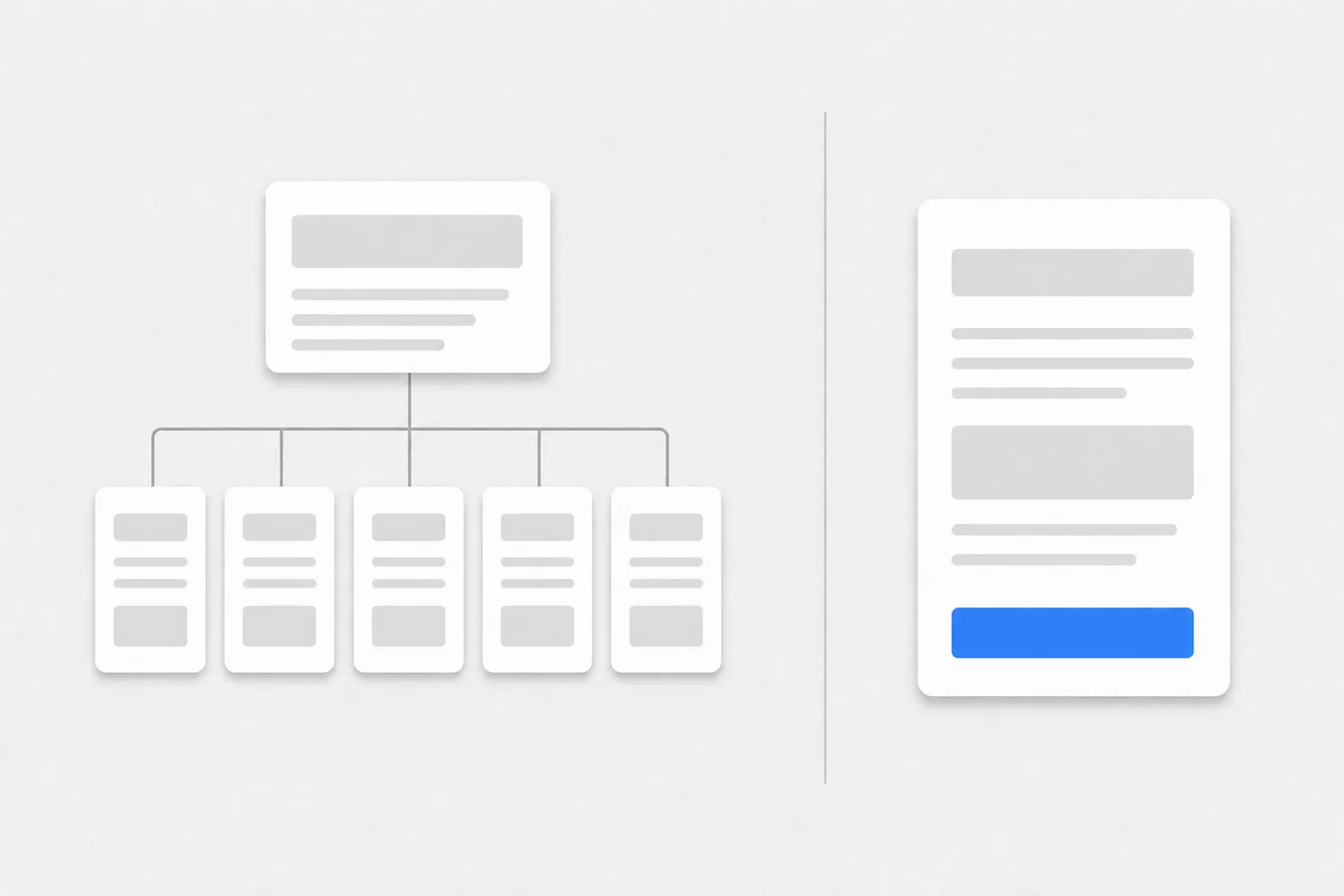
Landing page: one action: a call, an inquiry or a purchase. Full website: presents the whole business and every service.
02Number of pages
Landing page: one. Full website: several pages, per service, about, contact, blog.
03Menu and links
Landing page: no menu, links only toward the goal. Full website: a menu and links across the whole site.
04Where visitors come from
Landing page: mostly ads, email and posts. Full website: search, referrals and direct visits.
05Organic Google search
Landing page: weaker, covers a narrow topic. Full website: stronger, each service can have its own page.
06Build time
Landing page: faster, one page and one goal. Full website: longer, more content and structure.
You need a full website when you have several services and want people to find you through Google search, without paid ads. One page has a hard time ranking for ten different searches, while a website can have a separate page for each service.
You also need a website when customers want to get to know you before deciding: who you are, where you are, what you have done, how long you have been around. For a more expensive or long-term service, one page rarely builds that trust.
The most common answer is a combination. The website carries the business and organic search, and each campaign gets a landing page that leads to one offer. If you are only planning a site, How much a website costs explains what drives the price.
Build the landing page for phones first, because many people see and click ads on their phones. How many in your case shows up in the device data in Google Analytics 4 and in the campaign reports themselves.
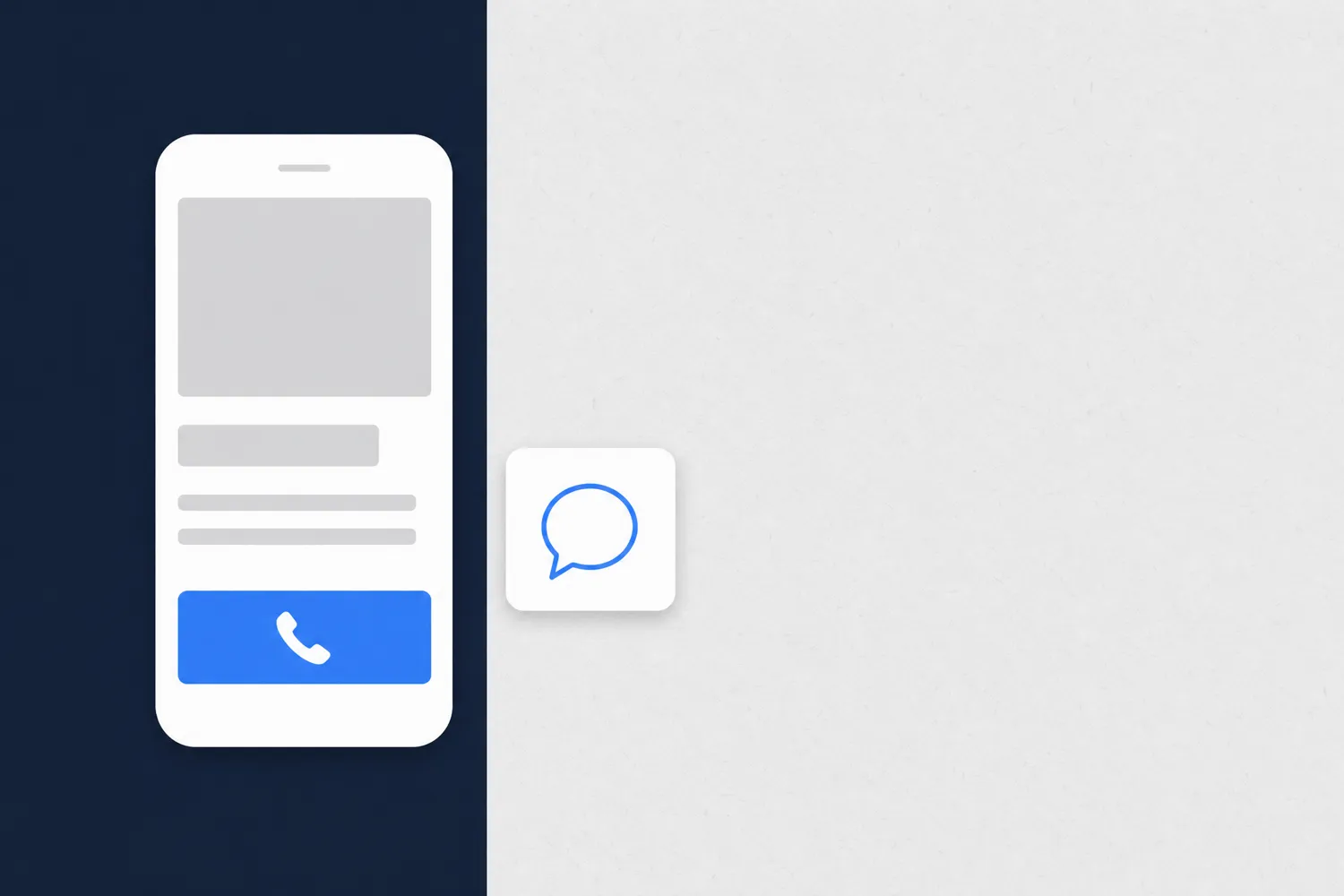
On a phone, a call button is worth more than a form. One tap starts a call, while a form means typing on a small keyboard. If you do need a form, keep the fields to a minimum: name, phone and one question are often enough.
The page has to load quickly on mobile data too. A heavy image at the top or a video that starts on its own slows down exactly the first screen, the one that decides whether the visitor stays.
How to tell whether a landing page works
A landing page works if enough visitors do what it was built for. That is why you measure conversion: how many people called, sent the form or bought, compared with how many arrived.
In Google Analytics 4, set up events for form submissions and clicks on the call button and mark them as key events. If you run Google Ads, link them to your ads account so you can see which ad brings inquiries, not just clicks.
Once you are measuring, change one thing at a time: the headline, the button, the number of form fields. After enough visits you can see what helped. Without measurement, every change is a guess.
If you are planning ads or a promotion, send us what you offer and to whom. After a consultation we look together at whether you need a landing page, a full website or both, and you choose who does the work.
A home page presents the whole business and leads visitors to many pages. A landing page has one goal, with no menu or extra links, and is built for visitors from a specific ad, email or post.
At the start, yes, if you have one service and bring customers in through ads. When you want people to find you through Google search for several services, you need a website with a separate page for each.
It is usually best on your own domain, for example yourdomain.com/offer. Visitors see a familiar address, and tracking and ad settings stay in one place.
As few as possible. Ask only for what you need to reply, usually a name, a phone number or email and a short question. Every extra field is one more reason for the visitor to give up.
Less time than a full website, because it is one page with one goal. Content usually takes the most time: text, images and proof. Once those are ready, the page is built quickly.